

APIs are Your Business’s Secret Weapon: How to Connect Your Tools and Stop Wasting Time

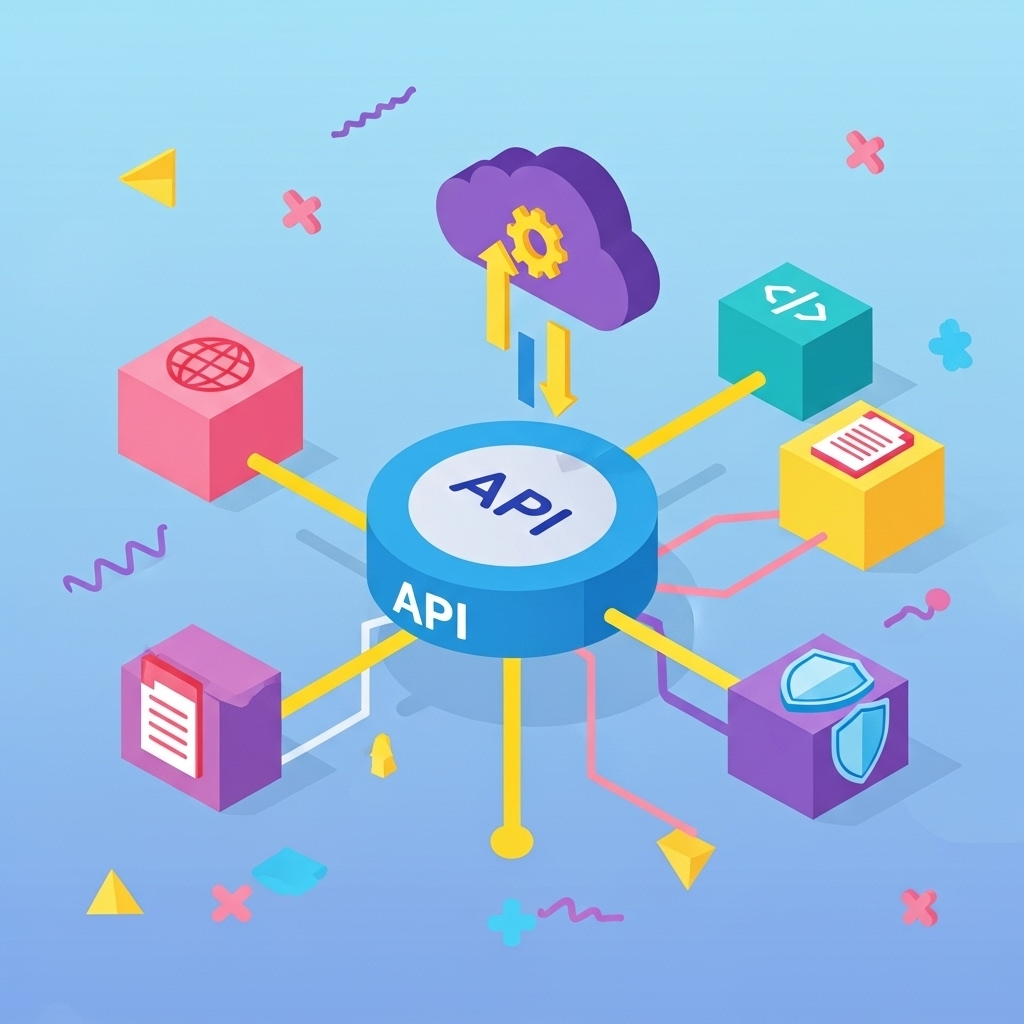
Let’s talk about a frustration that’s all too common in modern business. You’ve invested in a suite of powerful software tools—a CRM like HubSpot for your sales, Xero for your finances, and maybe Shopify for your e-commerce. Each one is brilliant at its job, but they live on separate digital islands, refusing to talk to each other.
Your team is stuck playing the role of a human messenger, endlessly copy-pasting data from one system to another. It’s not just tedious; it’s a slow, error-prone process that acts as a hidden drag on your entire operation.
Nearly every one of these tools has a built-in, secret doorway designed specifically to solve this problem? That doorway is called an API, and it’s the key to unlocking a level of efficiency you’ve only dreamed of.
So, What on Earth is an API?
Let’s ditch the technical jargon for a moment. An API, or Application Programming Interface, is best explained with a simple analogy.
Imagine you’re at a restaurant. You (an application) want to order a meal from the kitchen (another application). You don’t just wander into the kitchen and start grabbing ingredients. Instead, you give your order to a waiter (the API). The waiter takes your request to the kitchen, ensures the chefs understand it, and then brings the finished meal back to your table.
The waiter is the intermediary—the messenger who allows two different systems to communicate in a structured, predictable way.
In the business world, an API does the exact same job. It’s a secure and standardised set of rules that allows your CRM to talk to your accounting software, or your project management tool to talk to your team’s chat app. They are the invisible threads that can tie your entire digital operation together.
The Problem: Your Untapped Digital Goldmine
You are almost certainly already paying for dozens of these APIs without even realising it. They are included as a standard feature in most modern cloud software. But for many businesses, they remain a completely untapped asset—a digital goldmine of potential efficiency just waiting to be claimed.
Without using them, you’re stuck in a cycle of digital “busywork”:
- Manual Data Entry: Your team spends hours each week transferring customer details, order information, or financial data between systems.
- Costly Human Errors: Every time data is re-typed, there’s a risk of a typo or a misplaced decimal, leading to invoicing mistakes, shipping errors, and unreliable reports.
- Information Silos: Your sales team has no real-time visibility of a customer’s payment history, and your finance team has no idea which deals are about to close.
This operational drag doesn’t just waste time; it actively holds your business back, making it impossible to get a single, unified view of your operations.
The Solution: Workflow Automation as Your Universal Remote
So, how do you get these different systems to finally start talking to each other? You use a workflow automation platform.
Think of it like a universal remote for your home entertainment system. You have a TV from one brand, a sound system from another, and a streaming box from a third. The universal remote is the central hub that understands how to “speak” to each device, allowing you to control them all from one place.
Workflow automation tools do the exact same thing for your business software. They act as a central translator, “speaking API” to all your different applications. You can build simple, visual workflows that define a trigger and a series of actions, creating a chain reaction that runs on its own.
The Strategic Pay-Off: What This Really Means
Unlocking your APIs with workflow automation is about so much more than just saving a few minutes here and there. It’s a strategic move that delivers powerful, compounding benefits:
- Slash Manual Work: You reclaim hundreds of hours of your team’s time, freeing them to focus on high-value work like strategy, customer relationships, and creative problem-solving.
- Eliminate Costly Errors: By removing the human element from data transfer, you ensure your information is consistent and reliable across all platforms.
- Create a Single Source of Truth: When your systems are synchronised, everyone in the organisation is working from the same, up-to-date information.
- Scale Without Scaling Your Headcount: You build a more resilient and efficient operation that can handle a higher volume of work without a proportional increase in staff.
Your software is more powerful than you think. The secret doorways are already there, waiting. By using workflow automation to turn the keys, you can finally connect your tools and build a smarter, more scalable business.
Ready to unlock the hidden potential in your software? At Clickfox, we specialise in designing and building intelligent automation systems that eliminate manual work and drive real growth. Get in touch for a free discovery call today to see how we can transform your operations.